
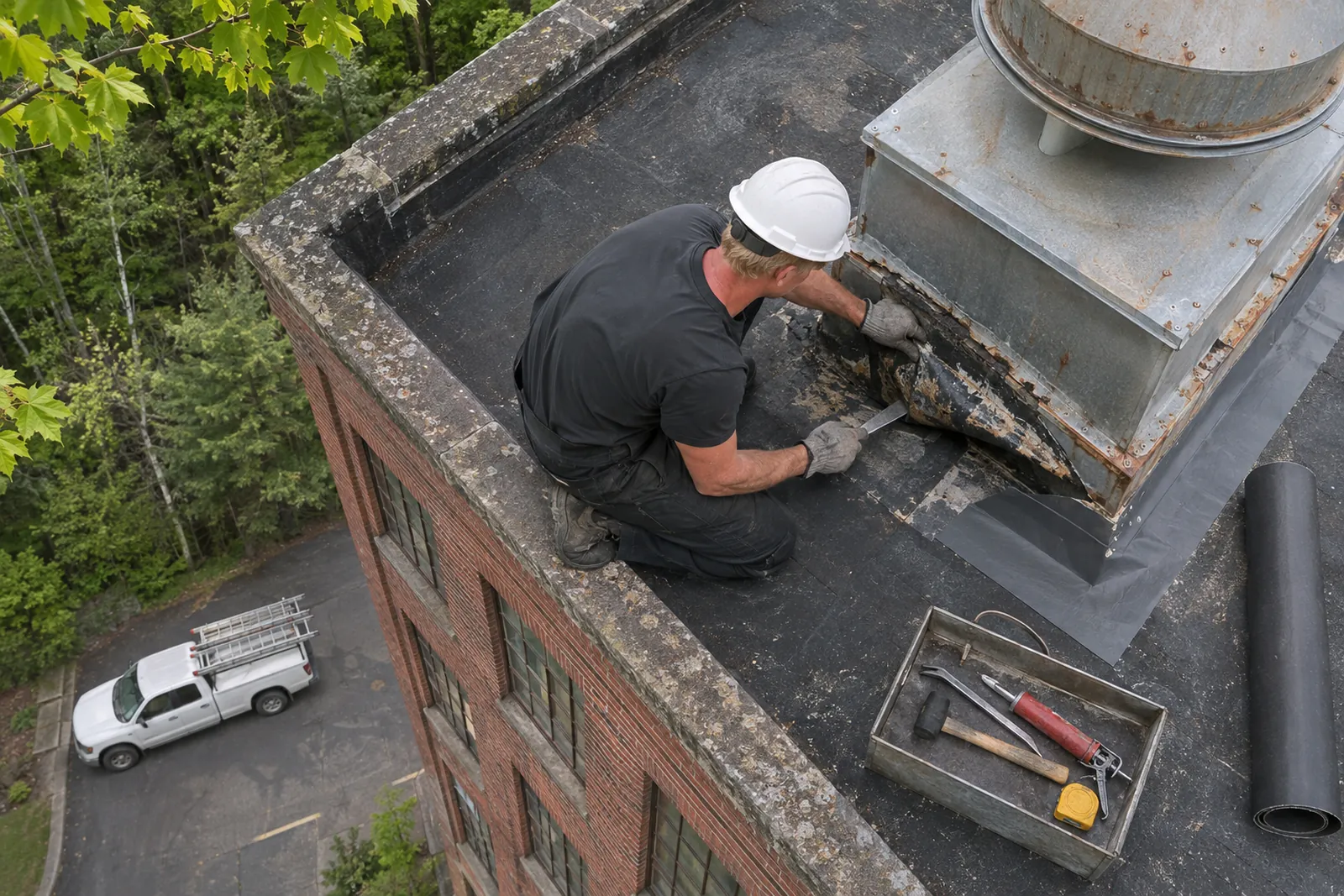
Danbury Industrial Roof Repair Contractor
Plant and Warehouse Roof Repairs Planned Around Running Equipment
As a Danbury industrial roof repair contractor, we repair plant and warehouse roofs around exhaust fans, process curbs, and equipment while production below keeps running.
- BuildingsPlants, warehouses, process buildings
- Common WorkFan curbs and penetrations
- SchedulingPlanned with your plant team
- You ReceivePhotos and repair notes
Where Danbury Industrial Roof Repair Fits
Danbury industrial roof repair works best when the damage follows equipment, foot traffic, and fan discharge while the field of the roof still holds. Wide wet areas across the deck shift the conversation toward replacement.
Plant roofs take hard use, but most damage gathers around equipment and traffic. These lists show where repair works and where it runs out.
Repair Fits When
- Leaks cluster around fan curbs and process penetrations
- Worn membrane follows the paths service techs walk
- Grease or chemical damage sits near one exhaust
- Flashing failed after new equipment was set
- Core cuts show dry insulation away from equipment
Replacement Gets Closer When
- Wet insulation runs across most of the deck
- Chemical exposure has softened membrane roof-wide
- The roof was already patched around every curb
- Deck corrosion shows from inside the plant
- Equipment changes call for a new roof layout
Industrial Roof Repair Problems at Danbury Plants
Plant roofs wear out in different places than office roofs. These five conditions come up most on Danbury industrial buildings.
Membrane breaking down near a fan
Grease, oils, or process chemicals from the exhaust settle on the roof and soften the membrane around the curb.
We replace the damaged membrane with a material suited to that discharge and add a protective pad or containment.
Leaks at equipment curbs
Curb flashing has cracked from vibration, or new equipment was set without flashing it into the roof.
We reflash each curb with new membrane or metal flashing and seal seams that run near the base.
Worn paths across the roof
Steady foot traffic from service techs scuffs and punctures the membrane between hatches and equipment.
We patch punctures, replace worn sections, and install walkway pads along the paths techs actually use.
Pipe and conduit leaks
Pitch pans and boots around process piping, gas lines, and conduit have dried out and pulled away.
We replace boots, refill or rebuild pitch pans, and support loose piping so it stops working the seal loose.
Debris in roof drains
Dust, filter scraps, and leaves from rooftop units collect at the drains and hold water on the roof.
We clear the drains and strainers, reset clamping rings, and note which units shed debris so maintenance can catch it.
Industrial Roof Repair Types We Handle in Danbury
Each repair is scheduled with the plant so equipment and production stay on track.
Roof Repair Around Exhaust Fans
Fan curbs are reflashed, discharge-damaged membrane is replaced with a compatible material, and pads or containment go where exhaust lands so the same spot stops wearing out.
Industrial Roof Leak Repair
Leaks at curbs, process penetrations, and heavy-traffic seams are traced from inside the plant and repaired from the roof while lines keep running below.
Industrial Roof Inspection
A full walk of the membrane or metal surface, seams, flashing, drains, curbs, and penetrations, with core cuts or moisture readings and photos of each finding.
Industrial Roof Maintenance
Spring and fall visits clear drains, check seams and flashing, reseal penetrations, and fix small punctures before winter or storm damage turns into leaks inside.
Industrial Roof Repair Outcomes for Danbury Plants
These are the changes plant managers see after repairs around equipment and traffic paths.
Before Repair
- Membrane soft and sticky around exhaust fans
- Water dripping near production lines in storms
- Scuffed paths and punctures between roof hatches
- Cracked boots on process piping and conduit
- Drains packed with filter scraps and dust
After Repair
- Compatible membrane and pads where exhaust lands
- Curbs reflashed and nearby seams sealed
- Walkway pads along paths techs walk
- New boots and rebuilt pitch pans at penetrations
- Clear drains and notes for the maintenance crew
Leak Near a Production Line?
Move what you can, protect electrical gear, and request an estimate. We coordinate roof access and any equipment shutdowns with your plant team.
Our Industrial Repair Process
Plant roof repairs follow four stages so safety, access, and production are planned before anyone climbs up.
Coordinate With the Plant
Roof access, safety rules, lockouts, and any equipment shutdowns are agreed with the plant team first. We note which units can stay running and where crews can stage materials.
Survey Equipment and Seams
Curbs, fan bases, penetrations, drains, and traffic paths get a close look, with core cuts where insulation might be wet. Photos record each problem area for the plant file.
Repair Around Equipment
Damaged membrane, flashing, and boots are replaced with materials matched to the roof and to any exhaust discharge. Walkway pads and protective pads go in at the end of the job.
Hand Off to Maintenance
The maintenance team gets photos, repair locations, and a short list of drains and curbs on the roof to check each spring and fall, which keeps small problems from growing.
Repair Services for Other Danbury Roofs
Industrial properties often include office wings, metal storage buildings, and older flat sections. These services cover them.
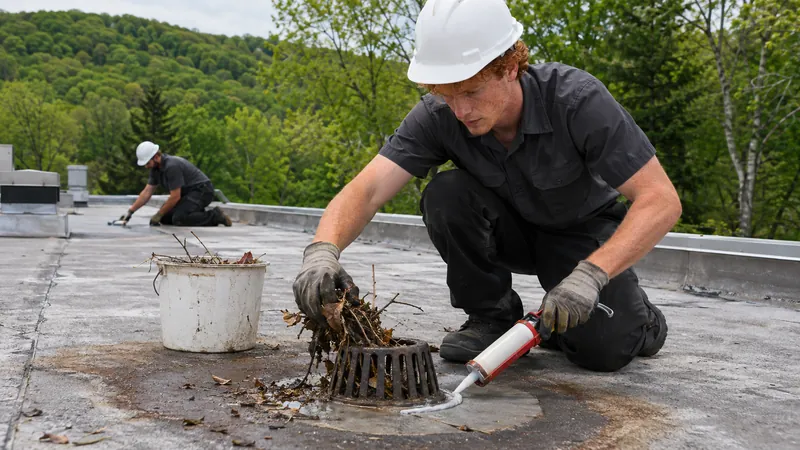
Flat Roof Repair
Office wings and loading docks with membrane roofs get seam, drain, and parapet repairs scheduled alongside the plant work.
Danbury Flat Roof Repair →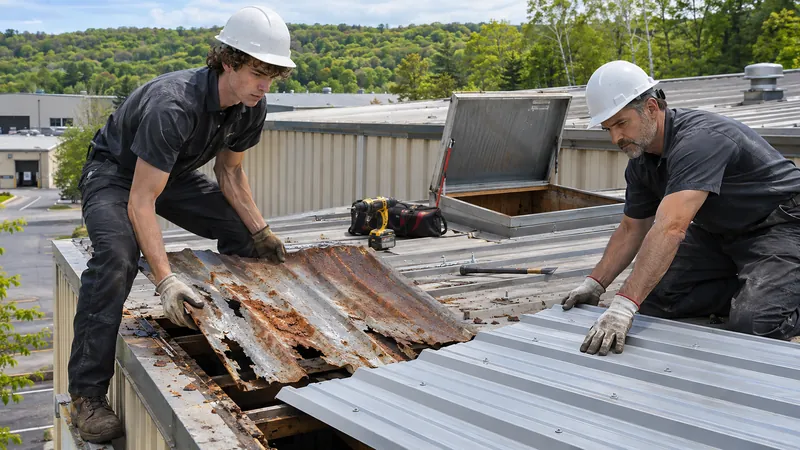
Commercial Metal Roof Repair
Storage buildings and shops with metal panels get new fasteners, resealed laps, and replacement panels where rust has broken through.
Danbury Commercial Metal Roof Repair →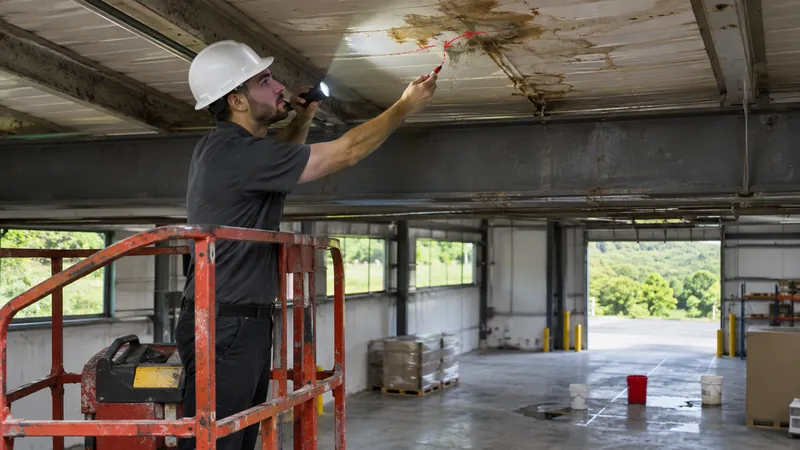
Commercial Roof Leak Repair
When a drip lands on a production line far from any curb, leak tracing pins down the opening before repairs start.
Danbury Commercial Roof Leak Repair →Plant Roof Questions We Answer
Answers for plant managers planning repairs on a working roof.
Leaks
How Is Industrial Roof Leak Repair Done at a Working Plant?
We repair from the roof while the plant keeps running, working around production areas and equipment. The usual sources are curb flashing, fan bases, pipe penetrations, and seams along busy traffic paths. Access, safety rules, and any shutdowns are agreed with the plant team before work starts.
Why Do Roofs Wear Out Around Exhaust Fans?
Two things wear them out: curb flashing cracks from vibration and age, and discharge from the fan, such as grease, oil, or chemicals, softens the membrane where it lands. We reflash the curb, replace the damaged membrane with a compatible material, and add a pad or containment.
Upkeep
What Does Industrial Roof Maintenance Cover?
Maintenance visits clear drains and gutters, check seams and flashing, reseal penetrations, patch small punctures, and look closely at the roof around equipment. Spring and fall visits catch winter and storm damage on Danbury plant roofs before it shows up as a leak over the production floor.
What Happens During an Industrial Roof Inspection?
We walk the full roof and check the membrane or metal surface, seams, flashing, drains, curbs, and penetrations, plus any damage from equipment service. Core cuts or moisture readings show whether insulation is wet. You get photos and notes listing what we found and which repairs we recommend.
Safety and Access
Can Roof Repairs Happen Without Shutting Down Production?
Usually, yes. Most repairs happen from the roof surface while lines run below. A unit is shut down only when crews must work on its curb or when discharge would land on them, and those shutdowns are scheduled with the plant team ahead of time.
Who Coordinates With Our Mechanical Contractor?
We do. When a leak traces back to a unit itself, such as a cracked housing or a condensate line, we document it with photos and work with your mechanical contractor so the roof repair and the equipment fix are done in the right order.
Hire a Danbury Industrial Roof Repair Contractor
Tell us where the plant roof leaks and which equipment sits nearby. We will plan access with your plant staff and repair it.